


- Uniformity in tone is essential.
Permissible
- All shades of blue, ranging from pale blue-grey to a deeper blue-grey, pale blue-grey is
2 breeders are on record here.
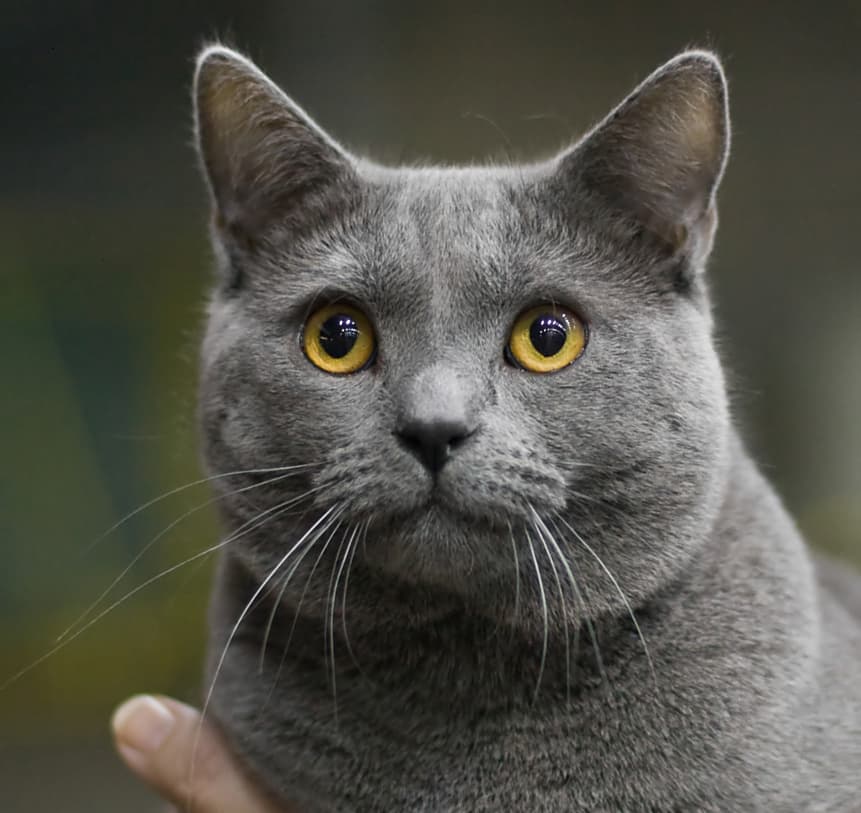
Medium to large, muscular cat with distinctive blue-gray woolly coat and copper or orange eyes. Known for its quiet, observant nature and sweet smile.
Ancient French breed possibly dating to medieval times. Legend says they were bred by Carthusian monks. Nearly extinct after WWII but carefully rebuilt. National cat of France.
Generally described as affectionate, loyal, intelligent, social, lively, playful, calm e observant.
That is the breed in general, not a promise about one animal. Ask the breeder what their own line is like, and meet the parents before you decide.
Breed reference from The Cat API.
Nobody has written this side yet. It is a judgement rather than data, so it waits for a person — not for a missing source.
Drawn from sources, not opinion: The Cat API. An empty column means we hold nothing for that side, not that there is nothing to say.
The Chartreux standard is published by the FIFe (Fédération Internationale Féline), the international federation of pedigree-cat clubs, and it is what show judges apply. This section sums up what it says about coat and colour. It does not assess any one animal: use it to know what to ask the breeder.
Glossy, dense
slightly woolly at the base, luxurious in growth.
Double coat, making the hair stand out.
Permissible
Shortened from FIFe standard CHA — each label is the standard’s own wording with the verdict lifted into the tag beside it. Read the full clause at source. FIFe prints no modification date for this standard. Text read on 31 ago 2026.
The colour varieties FIFe recognises for this breed are listed, with their EMS codes, in the table at the end of its standard. FIFe describes each colour group in the General Part of its standards.
The colours and patterns the standard admits, and what it prefers, discourages or disqualifies in each. An accepted colour says nothing about health. Quotations from the FIFe are in English, as the standard publishes them; the headings are ours.
Nothing hereditary is documented for the Chartreux breed, but there is still specific documentation to request from any breeder before paying a deposit. A responsible breeder will have these readily available; deflection is a red flag.
No breed-specific hereditary condition for Chartreux could be confirmed against UC Davis VGL, OMIA, TICA or icatcare. Patellar luxation and hip dysplasia are sometimes claimed for the breed online, but every instance found traces to pet-insurance marketing pages or templated veterinary-clinic 'breed info' pages carrying identical wording across unrelated clinic websites -- not an authoritative source, so the claim is not repeated here. A multi-breed Czech prevalence study that might bear on orthopaedic conditions across several breeds, including Chartreux, could not be retrieved (access was blocked) and is an open gap rather than a resolved finding.
What to ask for anyway
Breed-level information from The Cat API. It describes the Chartreux in general; any individual animal can differ.