Saltar al contenido

About the Belgian Shepherd Dog

Origin: Belgium
Typical life span
12-14 years
Size
Large — from its typical weight
Weight
Male
25-34 kg
Female
20-27 kg
Height
Male
61-66 cm
Female
56-61 cm
FCI status
Reconocida por la FCI
FCI group
Sheepdogs and Cattledogs (except Swiss Cattledogs)
Origin
Belgium
Also called
Perro de Pastor Belga

About

What is a Belgian Shepherd Dog?

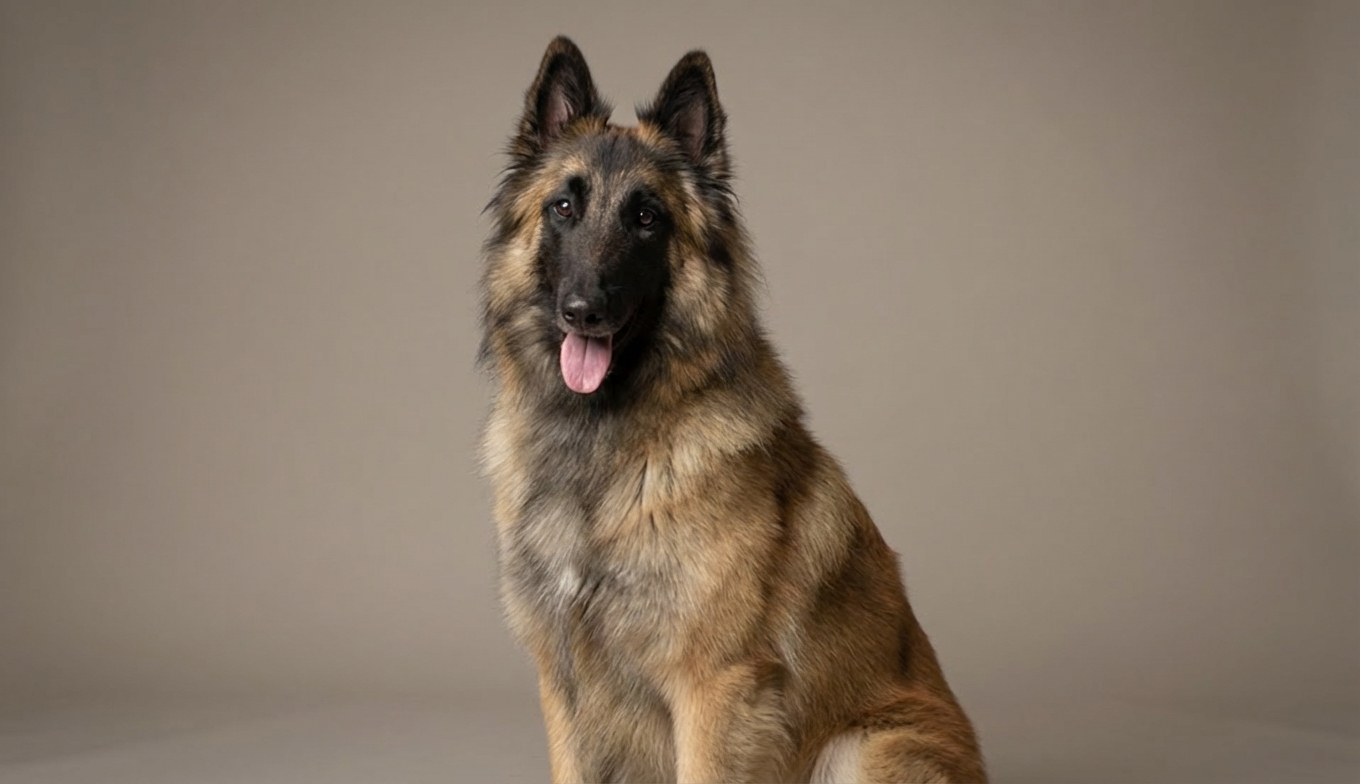
Versatile medium to large herding dog from Belgium known for intelligence, athleticism, and strong work ethic. The FCI recognizes four distinct varieties based on coat type and color: Groenendael (long-haired, black), Tervuren (long-haired, fawn/mahogany), Malinois (short-haired, fawn/mahogany), and Laekenois (rough-haired, fawn).

Belgian Shepherd Dog history and origins

Developed in late 1800s in Belgium as all-purpose herding and guard dogs. Professor Adolphe Reul of the Belgian School of Veterinary Science established the breed type in 1891, categorizing native dogs into four distinct varieties based on coat type and color

Belgian Shepherd Dog appearance and size

Males typically weigh 25-34 kg and stand 61-66 cm at the shoulder; females 20-27 kg and 56-61 cm.

Lo que dice el estándar de la raza

Criado para
Originally a sheep dog, today a working dog (guarding, defence, tracking, etc.) and an all-purpose service dog, as well as a family dog
Comportamiento y temperamento
The Belgian Shepherd is a watchful and active dog, bursting with energy, and always ready to leap into action. As well as its innate skill at guarding flocks, it also possesses the highly prized qualities of the best guard dog of property. Without any hesitation it is the stubborn and keen protector of its owner. It brings together all those qualities necessary for a shepherd, guard, defence and service dog. Its lively, alert temperament and its confident nature, showing no fear or aggressiveness, should be obvious in its body stance and the proud attentive expression in its sparkling eyes. When judging this breed, one should take into consideration its calm and fearless temperament

Quoted from FCI standard n°15. It describes the breed the registry recognises, not any individual animal.

Referencia de la raza de The Dog API.

Características

Tamaño
Large
Necesidad de ejercicio
Facilidad de adiestramiento
Caída de pelo
Cuidados del pelo
4 of 5

Long4 of 5

Short2 of 5

Rough4 of 5

Convivencia con niños
Coste de mantenimiento
Tolera quedarse solo
Inteligencia
Salud de la raza
5 conditions documented

Pros & cons

Pros y contras de la raza Belgian Shepherd Dog

Lo que obtienes con la raza Belgian Shepherd Dog

  • Función declarada en el estándar: «Originally a sheep dog, today a working dog (guarding, defence, tracking, etc.) and an all-purpose service dog, as well as a family dog»
  • El estándar describe la raza así: «The Belgian Shepherd is a watchful and active dog, bursting with energy, and always ready to leap into action»

Lo que asumes

  • Están documentadas 4 enfermedades hereditarias graves, sobre todo en huesos y articulaciones y cerebro y nervios. La pestaña de la guía de salud tiene la prueba que hay que pedir en cada una.
  • Exige muchos cuidados del pelo — la descripción del propio estándar es «The tail is furnished with long, abundant hair forming a plume.»

Extraído de fuentes y no escrito como opinión — investigación de salud citada, el estándar del propio registro, y estudios de longevidad revisados por pares. Estándar de la raza, FCI; Belgian Sheepdog Club of America — Health. Los animales de un criador pueden diferir de todo esto, y una columna vacía significa que no tenemos nada de ese lado, no que no haya nada que decir.

Characteristics

Estándar de la FCI · Belgian Shepherd Dog

Pelo y color

Tal como lo establece el estándar de la FCI. Cada línea de abajo está en las palabras del propio estándar, etiquetada con preferred y permissible.

Coat

In all the varieties the hair must always be dense, close-fitting and of good texture, with the woolly undercoat forming an excellent protective covering.

A.

LONG HAIR: The hair is short on the head, the outer side of the ears and the lower part of the legs, except on the rear side of the forearm which is covered from elbow to wrist by long hairs called fringes.

The hair is long and smooth on the rest of the body and longer and more abundant around the neck and on the forechest, where it forms a collarette or ruff and a jabot or apron.

The opening of the ear is protected by thick tufts of hair.

From the base of the ear the hair is upright and frames the head.

The back of the thighs is covered with very long abundant hair forming the culottes or breeches.

The tail is furnished with long, abundant hair forming a plume.

The Groenendael and the Tervueren are the long-haired.

B.

SHORT HAIR: The hair is very short on the head, the outer sides of the ears and the lower part of the legs.

It is short over the rest of the body and fuller at the tail and around the neck where it forms a collarette or ruff which begins at the base of the ear, stretching as far as the throat.

As well, the back of the thighs is fringed with longer hair.

The tail is ear of corn shaped, but does not form a plume.

The Malinois is the short-haired.

C.

ROUGH HAIR: What especially characterises the rough hair variety is the roughness and dryness of the hair, which, moreover, is rasping and tousled.

About 6 cm long over the whole body, the hair is shorter on the top of the muzzle, the forehead and the legs.

The hair around the eyes and those furnishing the muzzle should not be so long as to disguise the shape of the head.

However, it is essential to have furnishings on the muzzle.

The tail should not form a plume.

The Laekenois is the rough-haired

Color

  • Preferred
  • Permissible
  • Undesirable
  • Disqualifying

«Preferred», «permissible», «undesirable» y «disqualifying» — preferido, admisible, indeseable y descalificante — son las palabras de la propia FCI sobre la raza, y quedan en inglés porque así constan en el estándar. Describen lo que el estándar pide — no son una valoración de ningún perro concreto, ni nuestra.

Mask

  • For Tervueren and Malinois the mask must be very pronounced and tend to encompass the top and bottom lip, the corners of the lips and the eyelids in one single black zone.
  • A strict minimum of six points of skin pigmentation is called for: the two ears, the two upper eyelids and the two lips, upper and lower, which must be black.
  • Black overlay: In Tervueren and Malinois, the black overlay means that the hairs have a black tip which shades the base colour.
  • This blackening is in any case “flamed” and must not be present in great patches nor in real stripes (brindled).
  • In the Laekenois the black shading is more discreetly expressed.
  • Groenendael: Only uniform black.
  • Tervueren: Only fawn with black overlay or grey with black overlay, with black mask
  • Preferred: The fawn with black overlay is still
  • The fawn must be rich, neither light nor washed-out.
  • Preferred: Any dog whose coat colour is anything but fawn with black overlay or does not match the intensity of colour cannot be considered an elite specimen
  • Malinois: Only fawn with black overlay and with black mask.
  • Laekenois: Only fawn with traces of black overlay, mainly on the muzzle and the tail.
  • Permissible: For all varieties: a small amount of white on forechest and toes

Resumido de FCI standard n°15 — cada etiqueta está en las palabras del propio estándar, con el veredicto pasado a la etiqueta de al lado. Lee la cláusula completa en la fuente.

FCI varieties

FCI divides the Belgian Shepherd Dog into these varieties, listed in the registry's own words. Depending on the breed they separate colour, coat, size or line — they are not a full list of colours, which no registry we hold publishes. Ask a breeder which variety their line is.

  • Groenendael
  • Laekenois
  • Malinois
  • Tervueren

Información a nivel de raza, de The Dog API. Describe la raza Belgian Shepherd Dog en general; cualquier animal concreto puede ser distinto.

Health guide

Health & screening guide for the Belgian Shepherd Dog

Riesgos hereditarios conocidos en la raza Belgian Shepherd Dog, y la documentación concreta que hay que pedir a cualquier criador antes de pagar una señal. Un criador responsable tiene esta documentación a mano; esquivar la pregunta es mala señal.

5 enfermedades documentadas

Health checklist (PDF)

Bones & joints

Hip dysplasia

Serious

Malformation of the hip joint leading to joint laxity and, over time, arthritis and lameness. It is one of the parent club's four basic CHIC certificate requirements, applied across all four varieties (Groenendael, Laekenois, Malinois, Tervueren).

Qué pedir

A hip evaluation via OFA or PennHIP, on both parents.

1 source

Elbow dysplasia

Serious

Developmental abnormalities of the elbow joint causing pain and lameness, usually appearing before two years of age.

Qué pedir

An OFA elbow evaluation, on both parents.

1 source

Brain & nerves

Idiopathic epilepsy

Serious

Recurrent seizures with no identifiable structural or metabolic cause, well documented in this breed and specifically studied in its Groenendael and Tervueren varieties. Severity ranges from occasional mild seizures to clusters that are a veterinary emergency.

Qué pedir

No validated commercial genetic test exists. Research has linked risk to a haplotype on chromosome 14 (near the RAPGEF5 gene) and to the ADAM23 gene, but genetic-testing laboratories state plainly that the condition is too polygenically complex for a marketed DNA test at this time. Diagnosis is by veterinary neurological work-up (MRI and CSF analysis) to rule out other causes of seizures; ask about seizure history in the sire, dam and littermates.

3 sources

Eyes

Inherited eye disease, including progressive retinal atrophy

Serious

A group of inherited eye conditions, including progressive retinal atrophy, that can progress from mild changes to impaired vision or blindness.

Qué pedir

An annual eye examination by a board-certified ACVO ophthalmologist, registered with CAER, on both parents.

1 source

Immune system

Autoimmune (lymphocytic) thyroiditis

Monitor

Immune-mediated destruction of the thyroid gland leading to hypothyroidism. It is progressive but usually well managed for life with daily medication once diagnosed.

Qué pedir

An OFA thyroid panel (autoimmune thyroiditis) from an approved laboratory, on both parents.

1 source

Cuánto vive la raza Belgian Shepherd Dog, en los registros

Belgian Malenois

Supervivencia mediana de 12,0 años

Intervalo de confianza al 95% de 11,5–12,6 años, a partir de 337 muertes registradas entre 621 perros

Riesgo de mortalidad de 1.06 (0.96, 1.18) respecto a perros mestizos, cuya mediana es de 12,0 años.

Medido en el Reino Unido a partir de 584.734 perros. La supervivencia mediana no es una predicción para un perro concreto.

McMillan, K.M., Bielby, J., Williams, C.L., Upjohn, M.M., Casey, R.A. & Christley, R.M. (2024) Longevity of companion dog breeds: those at risk from early death. Scientific Reports 14, 531.

Belgian Tervuren

Supervivencia mediana de 13,8 años

Intervalo de confianza al 95% de 12,7–14,8 años, a partir de 55 muertes registradas entre 209 perros

Riesgo de mortalidad de 0.7 (0.54, 0.92) respecto a perros mestizos, cuya mediana es de 12,0 años.

Hay pocas muertes registradas en esta raza, así que la cifra es imprecisa.

Medido en el Reino Unido a partir de 584.734 perros. La supervivencia mediana no es una predicción para un perro concreto.

McMillan, K.M., Bielby, J., Williams, C.L., Upjohn, M.M., Casey, R.A. & Christley, R.M. (2024) Longevity of companion dog breeds: those at risk from early death. Scientific Reports 14, 531.

Puppies

No puppies listed right now

No Belgian Shepherd Dog breeder has a record on this platform yet, so there is nothing to list. That is a gap in our coverage, not a fact about the breed.

Secciones