
Saltar al contenido

About the Beagle

Origin: Great Britain
Typical life span
10-15 years
Size
Medium — from its typical weight
Weight
9-14 kg
Height
Male
33-41 cm
Female
33-38 cm
FCI status
Reconocida por la FCI
FCI group
Scent hounds and related breeds
Origin
Great Britain

About

What is a Beagle?

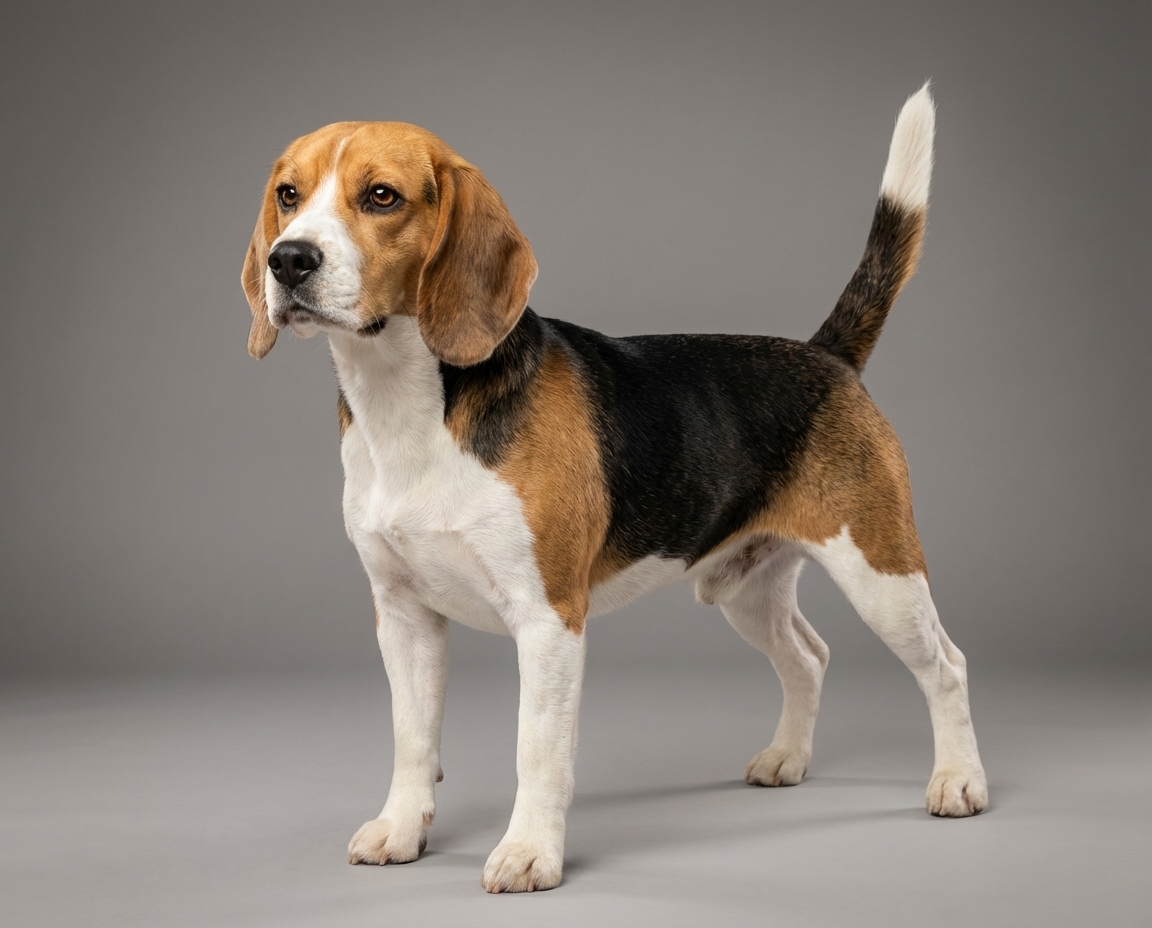
Compact, merry scent hound with sturdy build, distinctive tri-color or bi-color coat pattern, and cheerful disposition. Originally bred for hunting hare in packs with a distinctive baying voice.

Beagle history and origins

The modern Beagle was developed in Great Britain around the 1830s from various English hounds. Bred as 'foot hounds' for hare hunting, with hunters following on foot rather than horseback.

Beagle appearance and size

Males typically stand 33-41 cm at the shoulder and females 33-38 cm.

Lo que dice el estándar de la raza

Criado para
Scent Hound
Comportamiento y temperamento
A merry hound whose essential function is to hunt, primarily hare, by following a scent. Bold, with great activity, stamina and determination. Alert, intelligent and of even temperament. Amiable and alert, showing no aggression or timidity

Quoted from FCI standard n°161. It describes the breed the registry recognises, not any individual animal.

Referencia de la raza de The Dog API.

Características

Tamaño
Medium
Necesidad de ejercicio
4 of 5
Facilidad de adiestramiento
Caída de pelo
Cuidados del pelo
2 of 5
Convivencia con niños
Coste de mantenimiento
Tolera quedarse solo
Inteligencia
Salud de la raza
4 conditions documented

Pros & cons

Pros y contras de la raza Beagle

Lo que obtienes con la raza Beagle

  • Función declarada en el estándar: «Scent Hound»
  • El estándar describe la raza así: «A merry hound whose essential function is to hunt, primarily hare, by following a scent»
  • Exige pocos cuidados del pelo, adecuado para quien tiene poco tiempo — el pelo es «Short, dense and weatherproof»

Lo que asumes

  • Están documentadas 3 enfermedades hereditarias graves, sobre todo en huesos y articulaciones y ojos. La pestaña de la guía de salud tiene la prueba que hay que pedir en cada una.

Extraído de fuentes y no escrito como opinión — investigación de salud citada, el estándar del propio registro, y estudios de longevidad revisados por pares. Estándar de la raza, FCI; PubMed / An ADAMTSL2 founder mutation causes Musladin-Lueke Syndrome, a heritable disorder of beagle dogs. Los animales de un criador pueden diferir de todo esto, y una columna vacía significa que no tenemos nada de ese lado, no que no haya nada que decir.

Characteristics

Estándar de la FCI · Beagle

Pelo y color

Tal como lo establece el estándar de la FCI. Cada línea de abajo está en las palabras del propio estándar, etiquetada con permissible.

Coat

Short, dense and weatherproof

Color

  • Preferred
  • Permissible
  • Undesirable
  • Disqualifying

«Preferred», «permissible», «undesirable» y «disqualifying» — preferido, admisible, indeseable y descalificante — son las palabras de la propia FCI sobre la raza, y quedan en inglés porque así constan en el estándar. Describen lo que el estándar pide — no son una valoración de ningún perro concreto, ni nuestra.

Color de base

Tricolour (black, tan and white)

  • blue, white and tan
  • badger pied
  • hare pied
  • lemon pied
  • lemon and white
  • red and white
  • tan and white
  • black and white
  • all white.
  • With the exception of all white, all the above mentioned colours can be found as mottle.
  • Permissible: No other colours
  • Tip of stern white

Resumido de FCI standard n°161 — cada etiqueta está en las palabras del propio estándar, con el veredicto pasado a la etiqueta de al lado. Lee la cláusula completa en la fuente.

Lo que dice el estándar de la raza

Tamaño
Desirable minimum height at the withers 33 cms. Desirable maximum height at the withers 40 cms
La FCI da un límite solo por un lado, así que no hay intervalo que indicar.

Quoted from FCI standard n°161. It describes the breed the registry recognises, not any individual animal.

Información a nivel de raza, de The Dog API. Describe la raza Beagle en general; cualquier animal concreto puede ser distinto.

Health guide

Health & screening guide for the Beagle

Riesgos hereditarios conocidos en la raza Beagle, y la documentación concreta que hay que pedir a cualquier criador antes de pagar una señal. Un criador responsable tiene esta documentación a mano; esquivar la pregunta es mala señal.

4 enfermedades documentadas

Health checklist (PDF)

Bones & joints

Chondrodystrophy-linked intervertebral disc disease (IVDD)

Serious

A raised risk of premature disc degeneration from the same FGF4 retrogene insertion (CDDY) implicated in Dachshunds; testing-lab data show it at very high frequency in Beagles (allele frequency around 95%), and referral case series list Beagles among the breeds commonly presenting with IVDD.

Qué pedir

A CDDY/IVDD-risk DNA test on both parents

2 sources

Eyes

Primary open-angle glaucoma

Serious

A build-up of pressure inside the eye that progressively and irreversibly damages the optic nerve, leading to blindness. Documented in the Beagle via mutations in ADAMTS10, alongside the Norwegian Elkhound.

Qué pedir

A DNA test for the ADAMTS10 mutation on both parents, plus a current ACVO eye exam

1 source

Blood

Other

Cuánto vive la raza Beagle, en los registros

Supervivencia mediana de 12,5 años

Intervalo de confianza al 95% de 12,3–12,7 años, a partir de 1552 muertes registradas entre 4664 perros

Riesgo de mortalidad de 0.95 (0.91, 1) respecto a perros mestizos, cuya mediana es de 12,0 años.

Medido en el Reino Unido a partir de 584.734 perros. La supervivencia mediana no es una predicción para un perro concreto.

McMillan, K.M., Bielby, J., Williams, C.L., Upjohn, M.M., Casey, R.A. & Christley, R.M. (2024) Longevity of companion dog breeds: those at risk from early death. Scientific Reports 14, 531.

Puppies

No puppies listed right now

No Beagle breeder has a record on this platform yet, so there is nothing to list. That is a gap in our coverage, not a fact about the breed.

Secciones